
Key Takeaways
- Veriscope is a B2B marketplace connecting eyewitness video contributors with journalists.
- The platform’s Heatmap surfaces breaking news footage in real time, while its Amanah Protocol authenticates footage with tamper-proof metadata, making it usable for journalism, insurance, and legal applications.
- Founded by two journalists with combined experience at AFP and BBC, Veriscope is one of the few platforms in the world that combines user-generated content sourcing with built-in authentication at the point of capture.
Overview
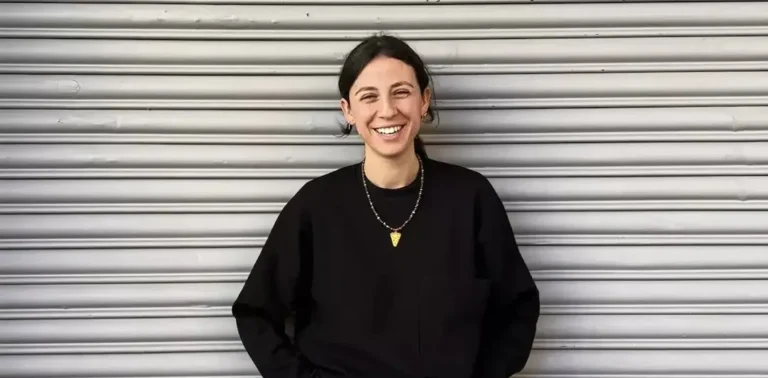
Veriscope AB is a media technology company founded in 2025 and headquartered in Stockholm. The company operates a marketplace that connects eyewitness video contributors with journalists, providing authenticated, metadata-rich footage sourced directly from the field. It was co-founded by Carl Klink, who serves as CEO, and Sarah Ibrahim, who serves as Chief Editorial Officer and COO.
Background
Carl Klink spent a decade in the journalism industry with five of those ten years at AFP, one of the world’s three largest news agencies. Sarah Ibrahim built her career at the BBC. Between them, they have covered some of the most consequential events of the past ten years, and they have watched the same problem repeat itself every single time.
When something happens, the most powerful footage rarely comes from a professional crew. It comes from the person standing closest to the event, a witness with a phone, a citizen journalist who got there first, an independent filmmaker who happened to be in the right place. That footage is raw, immediate, and irreplaceable. It is also almost impossible to find in time.
The moment something breaks, journalists flood social media trying to locate the video. They search for the source. They try to contact the person who posted it. They attempt to verify authenticity. They navigate rights clearance. The process can take days. By then, the news cycle has already moved. The story has been told without the footage that would have made it definitive.
Veriscope was founded to collapse that process into something that actually works at the speed of news.
Mission and Approach
The platform’s core function is matching. Contributors who capture footage at the scene upload it to Veriscope, where it is tagged with metadata at the point of capture: who recorded it, where, and when. Journalists on the other side of the marketplace can search by location, time, and event type, find relevant footage, verify its provenance, and license it, all without the manual back-and-forth that currently dominates the process.
Content moderation is handled through a community-based system. Contributors can flag sensitive material directly within the platform, and the community is incentivized to participate in moderation through a reward system that boosts contributor profiles and increases engagement. The platform is not public-facing in the traditional sense. It is built for the journalism community, which means the ethical norms around sensitive content are reinforced by the professional context of its users.
The global user-generated content market in journalism is growing rapidly as audiences increasingly expect real-time, on-the-ground footage from breaking events. At the same time, the proliferation of social media platforms has made sourcing that footage harder, not easier, as content moderation, algorithmic suppression, and platform censorship routinely bury the most important videos before they reach the journalists who need them.
Product and Offering
Veriscope currently offers two products, one live and one in development.
The Heatmap is the platform’s primary interface. It surfaces breaking news footage geographically in real time, allowing journalists to identify relevant content by location as events unfold. Contributors upload footage directly to the Heatmap, where it is tagged with source metadata before being made available to media buyers.
The Amanah Protocol is in development. It will apply a tamper-proof authentication layer to footage, certifying that video has not been manipulated and preserving the chain of custody from capture to publication. Beyond journalism, this opens the platform to insurance companies, legal teams, and any institution that relies on authenticated visual evidence to make decisions.
Business Model
Veriscope operates on a B2B transactional model. The platform takes a 35% commission on every video sale, against an industry-standard average price of $200 per clip. As the client base grows, the company plans to introduce bundle pricing and subscription tiers for recurring media partners. Revenue is currently transactional, with recurring models in development.
Market and Reach
Veriscope’s contributor network is concentrated in the Middle East and Africa, regions where both founders built significant professional networks during their journalism careers and where some of the most consequential and underreported visual stories originate. Media clients are currently based in Europe, where demand for verified, licensable eyewitness footage is highest among professional news organizations.
The intersection Veriscope occupies, authenticated user-generated content for professional journalism, is one that has been identified as a significant gap in the media technology market. Existing platforms either aggregate content without authentication or authenticate content without a functional marketplace. Veriscope is building both simultaneously.
Funding and Support
Veriscope has raised a pre-seed safe note from friends and family. The company is actively seeking investment and is currently in conversations with angel investors. No institutional funding has been announced.
Traction and Growth
Veriscope is at an early traction stage. The metrics the team tracks are deliberately focused on quality over volume: the number of active contributors publishing to the platform each week, the number of videos sold, and the average number of sales per contributor. Media partnerships with news organizations are the second pillar of the traction model, with European outlets in active pipeline discussions.
The company’s most significant milestone to date is proof of concept. There is no direct competitor combining the sourcing marketplace with built-in metadata authentication at the point of capture. That combination, and the journalism expertise behind it, is what the founders are betting on.
Misconception
Veriscope does not sell verified footage in the generic sense of the word. The distinction matters. Verification, as most people understand it, is a process applied after the fact, checking whether a video is authentic once it has already been uploaded somewhere. Veriscope authenticates at the source. The metadata, including who captured the footage, where, and when, is embedded at the moment of upload, streamlining a process that currently takes journalists hours into something that is done before the footage even hits the marketplace. The accuracy rate on that authentication process currently reaches up to 95%.
Outlook
The next 6 to 12 months are focused on converting pipelines into signed media partnerships and using those relationships to tell the stories that prove the platform works. For Veriscope, the most powerful sales tool is not a pitch deck. It is a published story built on footage that would not have existed without the platform. The team is actively working to create those stories and put them in front of the news organizations that need to see them.