
Overview
Zleep Health is a healthtech startup founded in 2024 and headquartered in Paris. The company develops a mobile program designed to help people recover from insomnia using Cognitive Behavioral Therapy for Insomnia (CBTi), a treatment widely recognized by sleep specialists as the first-line therapy for chronic insomnia.
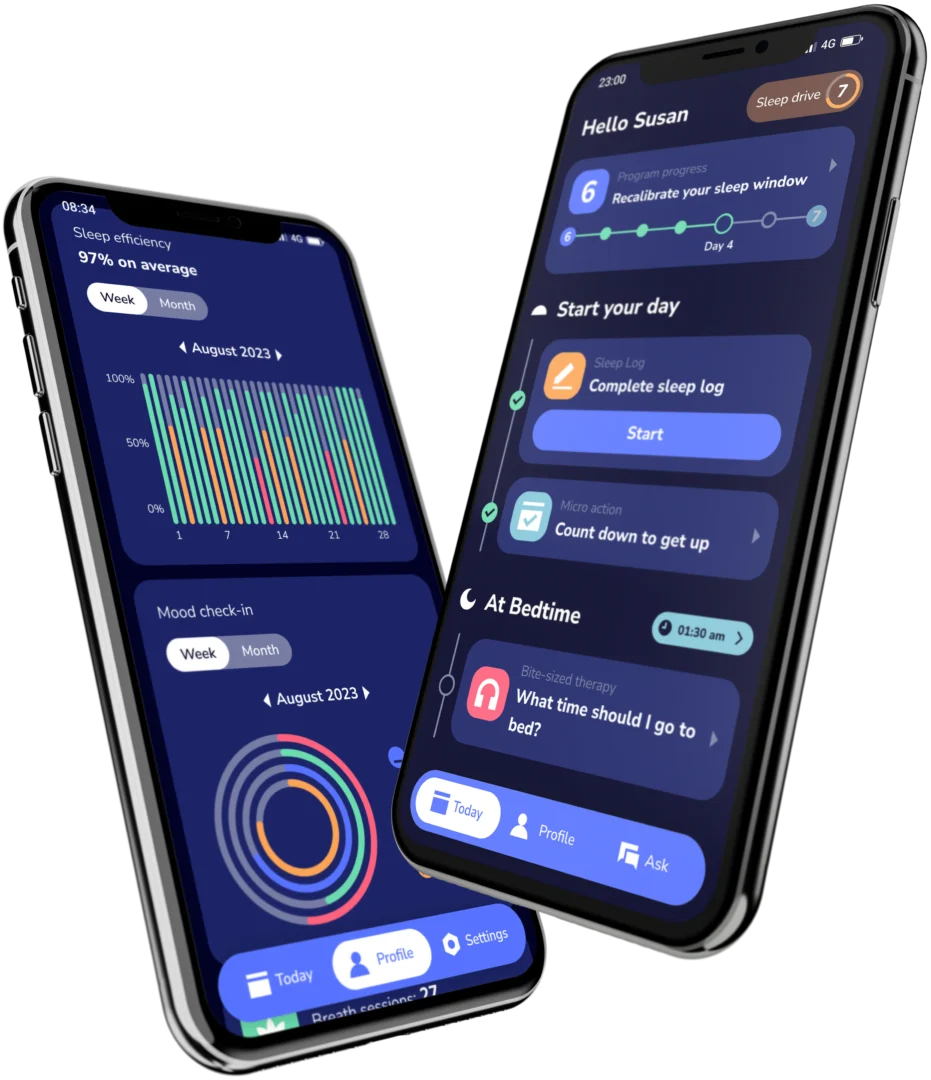
The platform delivers a structured sleep recovery program through a mobile app. Users begin with an assessment and then follow a personalized plan designed to address behavioral and cognitive patterns that disrupt sleep. The program is self-guided, though the company plans to add messaging with sleep experts in future iterations.
With a team of six and its CEO and co-founder Tiffany Bou Merhi working full time on the venture, Zleep is currently in an early traction phase.
Background
Sleep disorders represent a large and growing global health concern. Studies estimate that around one in five adults experiences insomnia symptoms, while roughly 10% suffer from severe forms of the condition.
At the same time, the broader sleep health economy has expanded rapidly. The global market for sleep aids and related products is expected to reach over $134 billion by 2031, reflecting growing attention to sleep as a component of health and productivity.
Despite this attention, access to non-pharmaceutical treatments remains uneven. Clinical guidelines in many countries recommend CBT-I as the primary treatment for chronic insomnia, yet access to trained specialists remains limited.
This gap between clinical recommendations and accessibility has created space for digital health tools that attempt to translate therapy-based methods into scalable programs.
Mission
Zleep Health’s mission is to make evidence-based sleep recovery more accessible.
The company focuses on delivering CBT-I through a digital platform rather than relying on traditional clinical pathways that often involve long wait times or limited availability of sleep specialists. By translating the therapy into a structured mobile experience, Zleep aims to help users access treatment as soon as they begin searching for solutions.
In practical terms, the company’s objective is simple: shorten the path between recognizing a sleep problem and receiving a structured intervention.
Product and Offering
Zleep offers a personalized sleep recovery program delivered through a mobile application.
The program begins with a diagnostic-style assessment that evaluates sleep patterns and behaviors. Based on this information, the platform generates a structured recovery program grounded in CBT-I principles such as sleep restriction, stimulus control, and cognitive reframing.
The experience is designed to be largely self-guided. Users progress through the program independently while tracking their sleep and behavioral adjustments over time. The company is also developing a feature that would allow messaging with sleep specialists.
Zleep emphasizes that its platform differs from many consumer sleep apps. Rather than focusing primarily on sleep tracking, the program attempts to address the behavioral and psychological factors that sustain insomnia.
Business Model
Zleep operates primarily as a B2C subscription platform.
Users enroll in structured recovery programs that typically run for several months. Payments are made upfront for the duration of the program, rather than through continuous monthly subscriptions.
Alongside its consumer offering, the company is developing a B2B channel targeting corporations interested in employee well-being. In this model, organizations can offer Zleep’s program to employees through workplace wellness initiatives.
The approach reflects a growing recognition that sleep quality has measurable effects on productivity and mental health in professional environments.
Market Focus
Zleep operates in the intersection of health technology and digital well-being.
The global digital insomnia therapeutics market alone was valued at roughly $3.35 billion in 2023 and is projected to exceed $5 billion by 2031 as digital health tools become more integrated into healthcare systems.
The company currently serves users internationally through its digital platform. However, its early B2B efforts focus primarily on France, the United Kingdom, and the Gulf region, where corporate wellness programs and digital health adoption have grown steadily in recent years.
In this landscape, Zleep positions itself as part of a broader shift toward non-pharmaceutical treatments delivered through digital platforms.
Current Stage and Traction
Zleep describes its current phase as early traction.
The company tracks several indicators of progress. These include the number of program downloads, user adherence to the therapy program, and measurable improvements in sleep quality among participants.
One milestone came through participation in VivaTech in Paris, where the team presented its concept and received early validation from industry stakeholders.
For the founders, however, the most meaningful signal has been user outcomes. According to the company, some participants have reported improvements after completing the program and have referred the product to their employers.

Outlook
Over the next 6 to 12 months, Zleep plans to focus primarily on user acquisition and product development.
The company is working to expand its technical team and refine the platform’s capabilities, including the integration of expert support features. At the same time, it aims to secure its first corporate clients through its workplace wellness offering.
As digital therapeutics continue to grow and behavioral treatments gain broader recognition, Zleep’s trajectory will depend on its ability to convert early engagement into sustained adoption.
For now, the company remains in its first stage: translating a clinical method into a scalable digital program and testing how widely that approach resonates with users.