The story of Lebanon’s startup ecosystem can be told in two very different ways.
On one hand, it does not compete with the major hubs of this world. Its institutions are not as organized or well-resourced, and they are taken far less seriously on the international stage. The legal and regulatory framework rightfully discourages foreign investors, and the geopolitical risks are too significant to ignore.
On the other hand, it is growing. And growing quickly.
With AI now widely accessible and its models increasingly efficient, the world has found itself at a new frontier. Lebanon is uniquely positioned to benefit from this moment if the right cards are played. A large pool of college-educated talent, combined with the structural failure of traditional institutions, has pushed graduates to bet on themselves, to build solutions from the ground up and raise capital around them.
That is the story Lebanon is bringing to VivaTech this week.
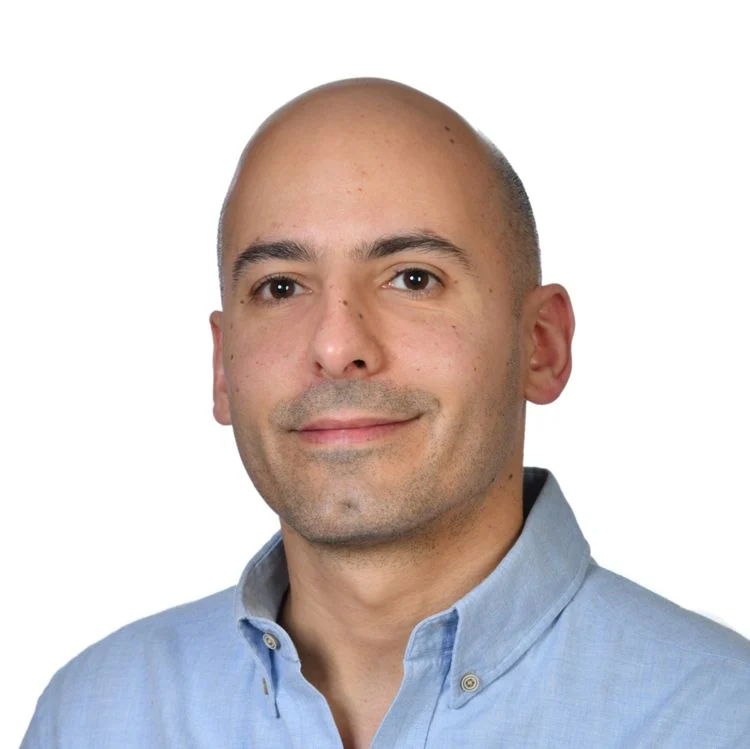
A delegation of 22 startups and 10 partners, including the country’s leading accelerators, is headed to Paris for the event. They are traveling alongside Lebanon’s Minister of State for Technology and Artificial Intelligence, Kamal Shehadi.
We sat down with the minister a few days before his departure to understand the mood of the delegation and what Lebanon is hoping to carry home from the world’s largest gathering of tech entrepreneurs and AI pioneers.
Last year you went to VivaTech with 20 startups and came back with a signed MoU with Sofrecom. This year you’re going back with 22. What are you hoping to achieve this time around?
VivaTech is an opportunity to show the world what Lebanon can do and what Lebanese founders are capable of when they get real international exposure. We’re talking about building partnerships, marketing technology, opening doors.
This year we’re also hoping to sign an MoU with Expertise France, and unlike some of these agreements that stay on paper, this one has funding behind it. Work should begin within a few weeks. The amount will be announced when the contract is signed, in July.
One thing I find encouraging is that some startups are coming back for a second year. That’s a good sign. It means the first trip meant something to them.
When we talk to friends and family abroad, or even here in Lebanon, about the local startup ecosystem, the most common reaction is genuine surprise that it even exists. Honestly, where is Lebanon ahead of where people expect it to be, and where is the work still the heaviest?
This is a question about right to play and right to win. Where can we as Lebanese actually compete in this game?
Our strongest asset is Lebanese talent. The tri-culturalism of Lebanese people is an immense advantage and provides the grounds for a very dynamic talent pool. But we also have something that few other countries have, which is centers of excellence shaped by AI and technology in fields like medicine and the creative industries. We have established ourselves in these domains, so it makes sense to combine modern technology with these existing strengths.
I have spoken with all 22 founders heading to VivaTech. They are sharp, organized, and confident. But when the conversation turns to registration or legal headquarters, many of them keep some distance from a full Lebanese identity because they believe it affects their ability to raise funds. These are the exact people you are presenting to the world as proof of what Lebanon can produce. What do you think about that duality, and what would need to change for that calculation to shift?
I should add that part of why we are not surprised about making a bold bid in tech is the ecosystem itself: the universities, the incubators, and the accelerators we already have.
But this is not only a duality. It is a reality. We have had problems with political stability and law enforcement, so it is not surprising that Lebanese companies carry that legacy and feel the difficulty of doing business here. This needs to be addressed by the Ministry of Justice and the Ministry of Economy. They are familiar with what the corporate and commercial world needs, and we now have to bring that same attention to startups and the more challenging environment they operate in. We need to amend the legislation around how corporations are set up. People in the tech world do not work with the hope of staying in one structure for 30 years. They know it will be short term.
We are very fortunate that last year we pushed through a law creating free zones for tech companies: no taxes, no national social security contributions, no customs duties, and freedom from bureaucratic red tape. This would be close to an ideal environment for tech companies, and in a few years there will be three, four, maybe five of these special technology economic zones. Some producing hardware, chips, connectors, boards, and there are already a couple of companies doing that. Others will be service-based companies that do not rely on doing business inside Lebanon. These zones will also be open to foreign companies. The law was approved, the decrees have been drafted and are being reviewed by the Shura Council, and I hope they will be released quickly.
You clearly have a plan, and anyone following you knows that. But two nights ago, Al-Muwaten brought together ten founders from across different sectors and stages. The one pain point that came up without exception was payments and money transfers, the ability to move money cleanly in and out of Lebanon. Where does that problem sit in your roadmap?
It sits on my agenda as a member of a government dedicated to reforming the banking system and removing Lebanon from the gray list. Confirming Lebanon as a credible financial jurisdiction is a must. We are committed to it. It is not formally in my portfolio, but I am directly involved. It is not easy, but we are moving.
A few weeks ago, LAIN launched with the goal of raising $5 million to invest in early-stage companies with a meaningful Lebanese footprint. If this initiative proves successful, will you go back and raise more, and what success metrics are you looking at?
You will recall that when I launched it, I said very clearly that this is now a private venture led by the private sector. My role was to convene the right people and support the launch and initial fundraising.
We actually have a commitment of $9 million, with $2.5 million already signed as a hard commitment and the rest in soft commitments. Even with $5 million, an angel network investing $100,000 to $200,000 per ticket can fund between 25 and 50 startups. I am not sure we will find that many worthy candidates. It is not easy, and not everyone deserves it.
This will be managed like any other angel investor group. The investors are in it for returns, and that must be proven. There must be genuine faith in the founders. This is not a subsidy. It is a pure corporate interest led by BY Venture Partners, and their board knows exactly what to do. But it is a major step forward. Almost 60% is coming from the diaspora, and we are not only getting investors. We are getting mentors too, people who will actively help these founders.
And finally, who are you supporting in the World Cup?
I’m not a football fan in general, but my family comes from Zahle and we have a lot of family in Brazil. So I guess it’s only natural for me to root for them.