
Key Takeaways
- Adstrum built its own proprietary neuromuscular sensor technology from necessity during Lebanon’s crises, and discovered they had created something better than what the market was offering at a fraction of the price.
- The Gecko Hand is not a prosthetic. It is a neural interface-powered bionic system that translates muscular intention into precise physical action, including the ability to use computers, a capability most competitors have never addressed.
- Adstrum has been named a DeepTech Pioneer by Hello Tomorrow twice, won the UN Business Innovation Competition, and is based at Station F under HEC Paris, bringing institutional credibility to technology that is still months away from its first commercial sale.
Overview
Adstrum Industries is a Lebanese-founded deeptech company incorporated in 2021 and headquartered in Paris, with operations in Ivry-sur-Seine. The company builds neural interface-powered bionic hands and industrial automation systems, developing the hardware, sensors, AI processing, and software stack entirely in-house. Its flagship product, the Gecko Hand, is currently at MVP level and undergoing regulatory approval for beta testing in European rehabilitation centers.
The company was founded by Manar Harakeh, who serves as CEO.
Background
Manar Harakeh spent over a decade working with the United Nations across the MENA region, the UK, and Ukraine in digital transformation, data science, and research. He developed education applications for non-formal learning environments and built expertise in data science that would later become essential for interpreting muscular signals. Hardware was always a personal passion alongside the software work, and he always believed the two could combine into something significant.
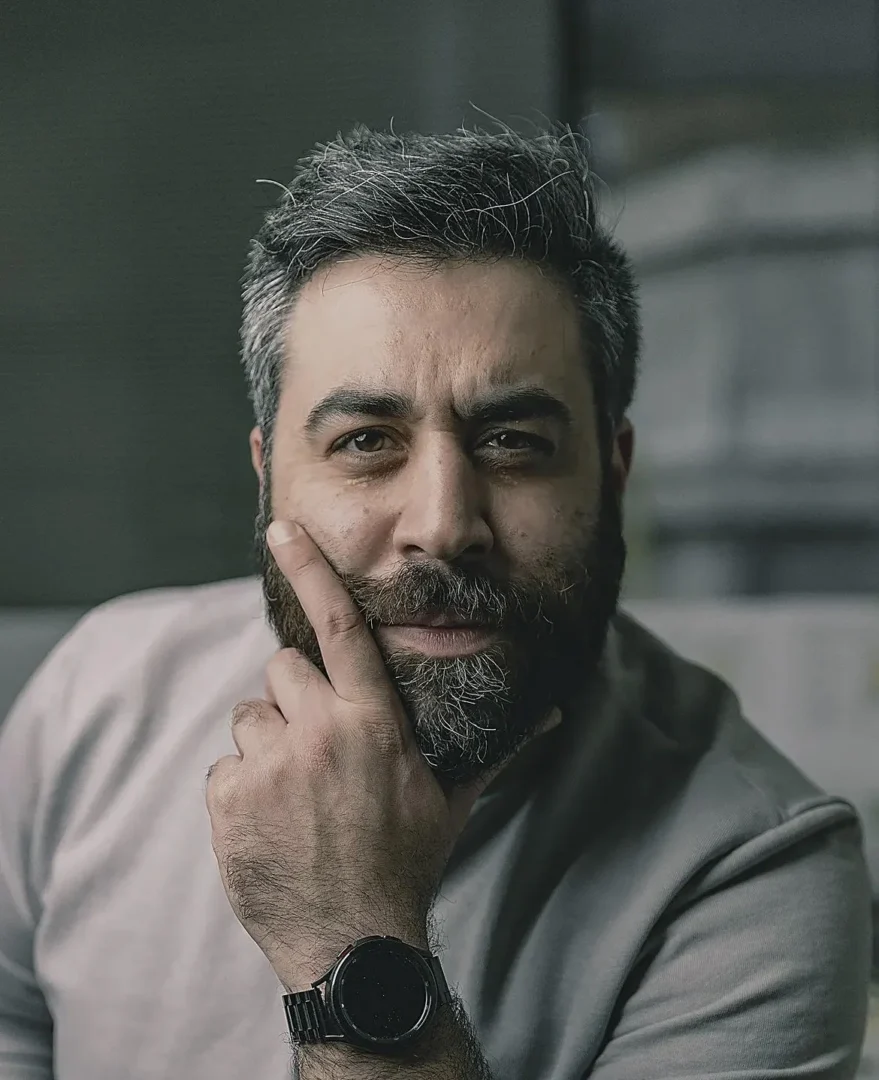
When he founded Adstrum in 2021, the ambition was to build a bionic hand that would restore physical independence for amputees and develop industrial robotic systems. Then Lebanon collapsed around him. The Beirut port explosion, COVID, fuel shortages, and the global supply chain crisis hit simultaneously. Foreign components became impossible to source. Adstrum had no choice but to build its own.
The results were not what anyone expected. The sensors they developed in-house matched industry-level quality. That discovery changed everything. It also revealed the deeper problem: an industry that had been monopolized for decades, kept expensive, kept slow, and designed around a pick-and-place function that had not kept pace with how the world actually worked. In an increasingly digital environment, amputees needed hands that could use computers. Almost nobody was building for that.
Mission and Approach
Adstrum describes its mission in simple terms: transcend human abilities. In practice, that means building technology that gives amputees back the physical capability they lost and extends what any human can do through neural interfaces that connect intention to action.
The company operates at the intersection of neurotech, medtech, AI, and robotics, a combination that is rare in a single team and rarer still when the team has developed proprietary technology across all four areas without external infrastructure to rely on.
Harakeh has built the company around what he calls failing with intent, a deliberate philosophy of testing to failure in order to understand precisely what does not work before converging on what does. The first version of the Gecko Hand was built, tested, and refined through that process. It is not the product of a linear development path. It is the product of systematic elimination.
The global prosthetics and orthotics market was valued at over $6 billion in 2023 and is growing steadily, but the bionic hand segment remains dominated by a small number of players charging prices that put the technology out of reach for most of the people who need it. Adstrum’s positioning is both a technical and a commercial disruption of that status quo.
Product and Offering
The Gecko Hand is Adstrum’s bionic hand for amputees. It features intuitive and adjustable grip patterns, sensitive touch sensors, a rotatable quick-disconnect wrist that meets industry-standard attachment specifications, replaceable batteries, USB-C fast charging, and online software updates that continuously improve performance without requiring hardware changes.
At the core of the system is Octosense, Adstrum’s proprietary 24-electrode neuromuscular sensor array arranged in a 360-degree configuration around the residual limb. Octosense captures the electrical signals generated by muscular movement and feeds them into an embedded AI processor that uses pattern recognition to translate those signals into precise, natural hand movement. The result is a system where the user thinks about moving their hand and the hand moves, without manual calibration or conscious translation.
The complete Neurex system, which combines Octosense, the AI processor, the Gecko Hand, and the companion mobile and Windows application, gives users control over grip patterns, sensitivity settings, and connectivity with external devices. The app’s freemium model includes core functionality, with a paid tier unlocking connection to home appliances and a broader range of digital devices.
Adstrum also develops industrial robotic hands and automation systems as a separate product line, built on the same core technology.
Business Model
Adstrum operates on a B2B2C model. In most European markets, amputees cannot purchase bionic hands directly. They go through certified prosthetists and rehabilitation technicians who are legally authorized to prescribe and fit the devices. Adstrum sells to those technicians and the rehabilitation centers they work in. A direct-to-consumer channel is planned for a later stage.
Revenue streams include direct product sales, licensing of the underlying technology, and subscription revenue from the mobile application’s paid tier.
Market and Reach
Adstrum is currently focused on Europe, where it is navigating the regulatory approval process required before commercial beta testing can begin. US and Canadian FDA approval processes are already underway in parallel, with North America identified as the next major market. The regulatory path is the single most significant constraint on the company’s timeline, not the technology itself.
Funding and Support
Adstrum was bootstrapped through its early years before raising from an angel investor in France. The company is currently resident at Station F in Paris, the world’s largest startup campus, under the HEC Paris incubator program.
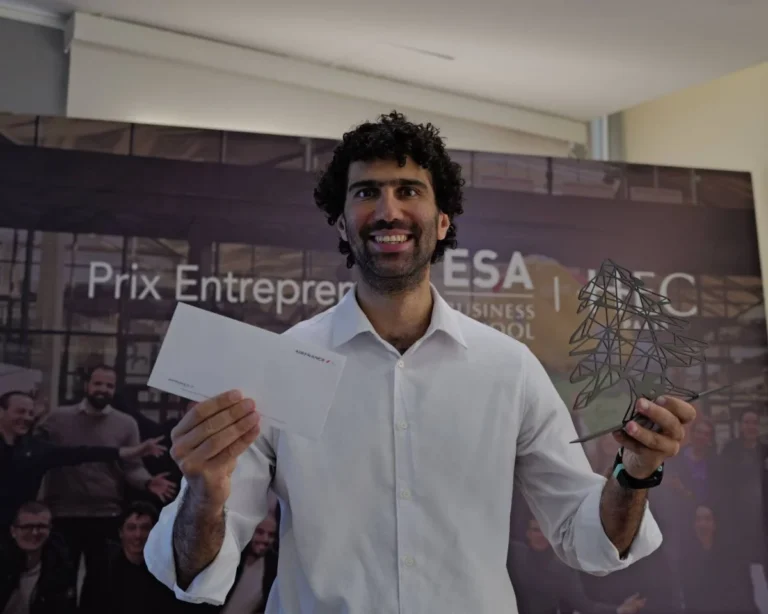
Its recognition track record is significant for a company still pre-commercial. Adstrum won the Prix Entrepreneur at ESA HEC, has been named a DeepTech Pioneer by Hello Tomorrow on two separate occasions, and won the United Nations Business Innovation Competition in 2023. US patents protecting the core technology have been filed and European patents are being finalized.
Traction and Growth
Adstrum is at MVP stage. The metrics the company is tracking are not sales or revenue. They are regulatory milestones, quality management system certifications, ISO compliance, and real-world testing with users in rehabilitation centers. Those are the gates that must open before commercial activity can begin.
The milestones Harakeh points to are the development of the technology itself and the team he has assembled around it. Both represent years of work that most companies operating in this space would not have attempted without significantly more capital. Patents in the US and pending in Europe are the formal validation of how novel the underlying work actually is.
Misconception
Adstrum is consistently described as a prosthetics company. Harakeh pushes back on that directly. Adstrum does not make prosthetics. It builds a technology platform that augments human capability and extends the ability to control devices through neural interfaces. The Gecko Hand is the first application of that platform. It will not be the last.
Outlook
The next 6 to 12 months are focused entirely on clearing the regulatory path and beginning beta testing with real users in European rehabilitation centers. Once approvals are in place, the commercial phase begins. For a company that built its own sensors during a national crisis, developed novel neural interface technology without institutional infrastructure, and has already attracted recognition from the UN, Hello Tomorrow, and HEC Paris, the gap between where Adstrum is and where it is going is largely a regulatory one. That is a solvable problem.